Best Telescope for Kids and Beginners: 76mm From £65
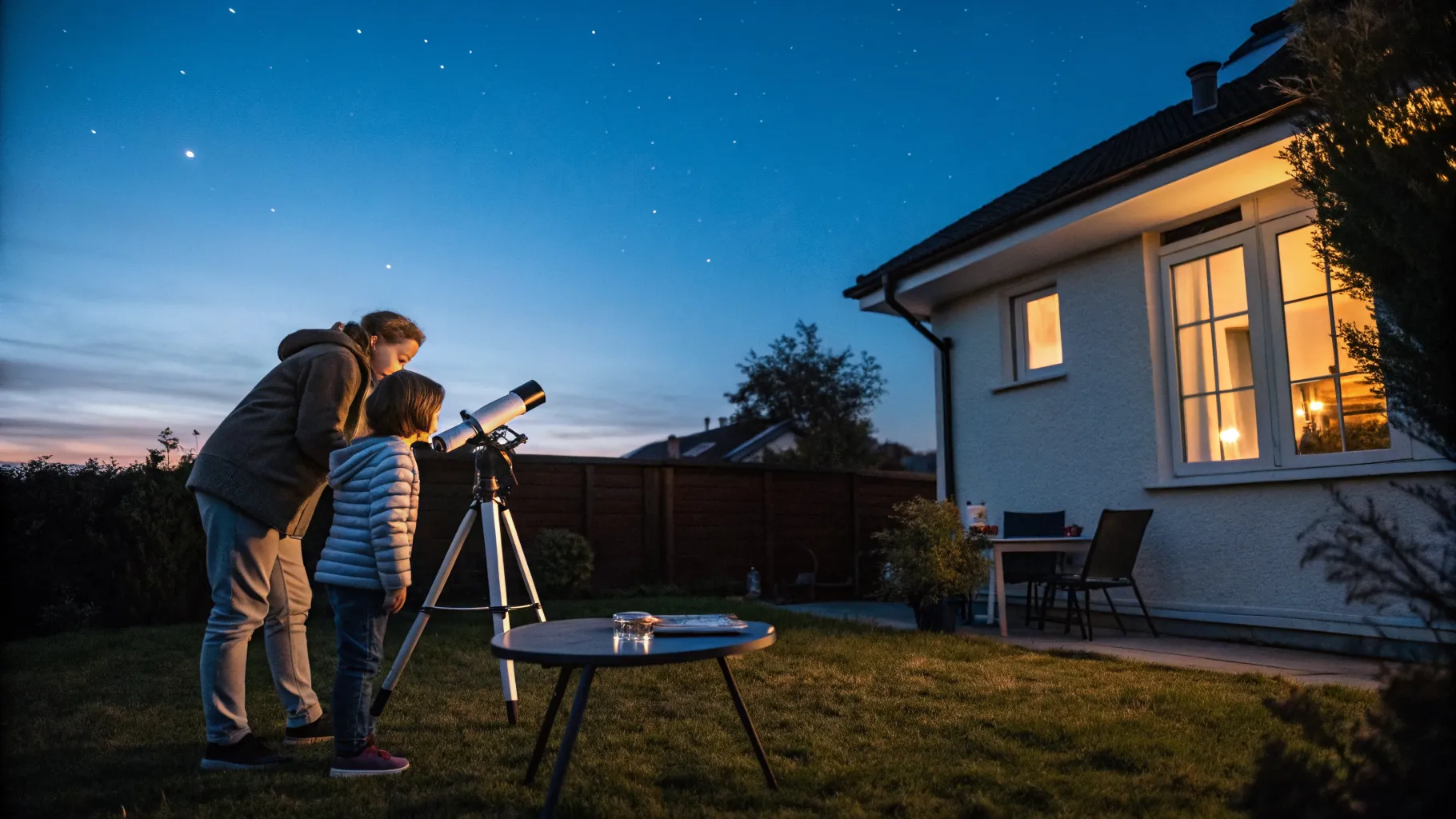
Buying a first telescope for a child is one of the easiest purchases to get wrong. The packaging that shouts “600x magnification!” is usually the one to avoid, and the cheapest box in the supermarket often does more to put a child off astronomy than to draw them in. The good news is that a genuinely good starter scope does not cost a fortune in the UK.
This guide covers what actually matters, the models worth your money, and how to give your child the best chance of seeing something on the first night.
The one spec that matters: aperture, not magnification
Aperture is the diameter of the main lens or mirror, measured in millimetres. It decides how much light the telescope gathers, and light is what lets you see anything at all. A 76mm scope collects far more light than a 60mm one, and that difference is the gap between a bright, sharp Moon and a dim grey smudge.
Magnification, the number splashed across cheap boxes, is almost meaningless on its own. Any telescope can reach “300x” with the right eyepiece, but without enough aperture behind it you just get a big, dim, wobbly blur. A useful rule of thumb is that the highest magnification worth using is roughly twice the aperture in millimetres, so a 76mm scope tops out near 150x in practice. Anything advertising 525x on a 60mm tube is selling a number, not a view.
For a child, aim for at least 70mm to 130mm of aperture. That range comfortably shows the Moon’s craters, Jupiter and its four big moons, Saturn’s rings and the brighter star clusters. Skip anything that leads with magnification and never mentions aperture.
Tabletop Dobsonians: the best first telescope for most kids
If you want one type of telescope for a child, make it a tabletop Dobsonian. These are short reflector telescopes that sit on a simple rotating base rather than a tripod. There are no fiddly counterweights or shaky legs, and a child can point it just by nudging the tube. Set it on a table, a wall or a sturdy box and you are observing in seconds.
Celestron FirstScope 76 (around £66 to £70). A 76mm reflector on a small Dobsonian base, sold in a Royal Observatory Greenwich edition through UK museum shops. It is light, genuinely usable on the Moon and bright planets, and a sensible entry point for a child of about six and up. The supplied eyepieces are basic, but it shows real detail straight away.
National Geographic 76/350 (around £65 to £115). Another 76mm tabletop reflector that arrives assembled and ready to use, with two eyepieces in the box. It covers the same targets as the FirstScope and is widely stocked in the UK.
Sky-Watcher Heritage-76 (around £65). A 76mm, 300mm focal length tabletop Dobsonian with a wooden base and smooth, fluid movement. It comes with a 5x24 finderscope and two eyepieces. The finder and eyepieces are fair rather than excellent, but the optics give honest views and it is built to be handled by small hands.
Sky-Watcher Heritage-130P FlexTube (around £194). This is the one to buy if you can stretch the budget and you suspect the interest is going to stick. At 130mm aperture and 650mm focal length (f/5), it gathers far more light than the 76mm scopes, which means a brighter Moon, more planetary detail and a real chance at deep-sky objects like the Orion Nebula. The collapsible FlexTube design folds down for storage and travel. It suits older children, roughly nine and up, and it is a scope a teenager or adult will happily keep using.
Refractors on a tripod: familiar, but choose carefully
A refractor is the classic long tube on a tripod that most people picture when they think “telescope”. They are low-maintenance and good on the Moon and planets, but cheap ones often come with flimsy tripods that shake at the lightest touch, which is maddening for a child.
Bresser Junior 70/400 (kids’ refractor with backpack). A 70mm refractor with a 400mm focal length, aimed at ages eight and up. It comes as a complete kit with a tripod, finder, three eyepieces, a smartphone holder and a small backpack to carry it all. The optics are modest and the tripod is light, but you get a lot of usable kit for the money and the backpack makes it easy to take to a campsite or a relative’s garden.
Celestron Inspire 100AZ (around £259 and up). A step up in both aperture and price. This 100mm refractor with a 660mm focal length sits on an altazimuth tripod and includes two eyepieces, an erect-image diagonal that also makes it usable for daytime nature watching, a red LED torch built into the mount and a smartphone adapter. It is more than a young beginner strictly needs, but it grows with an older child and is steadier than the budget refractors.
Smart telescopes: a different kind of stargazing
App-controlled smart telescopes have changed what “looking at the sky” means. Instead of squinting through an eyepiece, you point the unit at a target with your phone, and it finds the object, tracks it and stacks images live on your screen. They reveal colour and faint detail in galaxies and nebulae that no small beginner scope can show by eye.
ZWO Seestar S50 (around £539). The best known of these, a 50mm f/5 triplet apochromat with a 250mm focal length built into an all-in-one body that weighs about 2.5kg. It sets itself up, controls from a phone app and produces shareable images of the Moon, the Sun with its supplied filter fitted, nebulae and galaxies. For a screen-comfortable child or a family that wants quick results, it is brilliant. The trade-off is that it is photography led, so there is no traditional eyepiece view, and at this price it is a bigger commitment than a tabletop Dobsonian.
A smart telescope makes a wonderful second purchase, or a first one for a family that values instant results over the craft of finding things yourself. For a young child learning how the sky moves, a simple Dobsonian still teaches more.
Matching the telescope to the child’s age
- Ages 5 to 8: A 76mm tabletop Dobsonian such as the Celestron FirstScope or National Geographic 76/350. Light, near indestructible, no setup.
- Ages 8 to 11: The Sky-Watcher Heritage-76, the Bresser Junior 70/400 if they want a “proper” tripod scope to carry around, or the Heritage-130P if the interest is clearly there.
- Ages 11 and up: The Sky-Watcher Heritage-130P or Celestron Inspire 100AZ, both of which keep their value for years. A Seestar S50 if the appeal is imaging and sharing.
Getting the best from the first night
The telescope is only half the job. Where and how you use it decides whether your child stays interested.
- Start with the Moon. It is bright, full of detail and impossible to miss. Avoid a full Moon, which is flat and glaring; a half Moon shows craters in dramatic relief along the line between light and dark.
- Let the scope cool down. Bring it outside 20 to 30 minutes before observing so the optics settle to the night air, or the view shimmers.
- Use the lowest magnification first. The widest eyepiece (the one with the biggest number in millimetres) gives the steadiest, easiest view. Find the target there, then swap to a higher power.
- Get away from streetlights when you can. Even a back garden away from direct light beats a lit pavement. For a real wow moment, plan a trip to a darker site.
The UK has seven International Dark Sky Reserves, including Exmoor, the South Downs and Bannau Brycheiniog (the Brecon Beacons), plus a wider network of accessible stargazing spots you can find on the Dark Sky Discovery Sites map. Under a properly dark sky, even the cheapest 76mm scope shows far more, and the Milky Way appears to the naked eye. For independent reviews of specific models before you buy, BBC Sky at Night Magazine tests current kids’ telescopes each year.
If you are still weighing up whether to go for a child-focused scope or a general starter model that the whole family can use, our beginner telescope buying guide walks through the same decisions for adults.
Frequently asked questions
What is the best telescope for a child who has never used one? A 76mm tabletop Dobsonian like the Celestron FirstScope 76 or National Geographic 76/350. There is nothing to assemble, the base is stable, and it shows the Moon and bright planets on the first night with no skill required.
How much should I spend on a kid’s first telescope? You can get a genuinely good starter scope for £65 to £120. If the interest is already strong, the Sky-Watcher Heritage-130P at around £194 gives a real step up in what they can see and lasts for years. Avoid the very cheapest supermarket telescopes regardless of budget.
Why should I ignore the magnification number on the box? Because high magnification without enough aperture just produces a dim, blurry, shaky image. A scope is only as good as the light it gathers. Aperture in millimetres is the figure that matters, and a useful maximum magnification is roughly twice that number.
Is a smart telescope like the Seestar S50 a good first telescope for kids? It is excellent for instant, shareable images of nebulae and galaxies, and great for a screen-comfortable child. But it shows results on a phone rather than through an eyepiece, and at around £539 it is a larger outlay. Many parents start with a simple Dobsonian and add a smart telescope later.
What can a child actually see with a beginner telescope from the UK? Plenty. Craters and mountains on the Moon, Jupiter with its four largest moons, Saturn’s rings, the phases of Venus, and brighter star clusters. From a dark sky site, a 130mm scope also reaches nebulae such as the Orion Nebula.
At what age can a child use a telescope on their own? Around 10, most children can set up and aim a tabletop Dobsonian themselves. Younger children enjoy it just as much but generally need an adult to point the scope and find the target, which is part of the fun.
Clear skies forecast? Get a nudge.
Our weekly email flags the next good UK observing window and one easy target to find.
Join the listMore from Starvest
Keep reading
Best Telescopes for Beginners in the UK (Tested by Price Bracket)
The best beginner telescopes in the UK by budget, from sub-£150 tabletop scopes to app-guided and smart telescopes, with real 2026 prices.
What Can You See with Binoculars at Night? A Realistic Astronomy List
A realistic list of what you can see with binoculars in astronomy, from the Moon and Jupiter's moons to Andromeda, with tips for spotting each from the UK.
How to Set Up and Use Your First Telescope (Step by Step)
How to use a telescope as a beginner: assemble the mount, align the finder, focus, and find your first targets. A clear step-by-step UK guide.